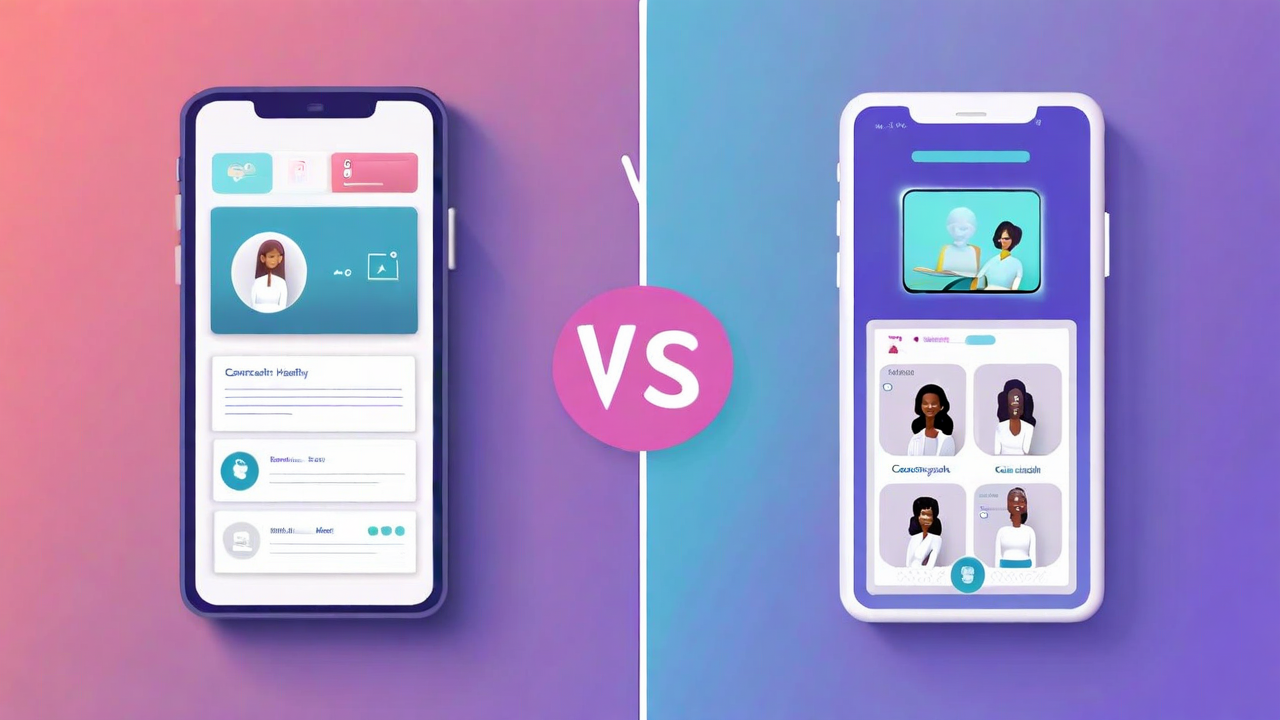
The app stores are full of mental health tools. Sleep trackers, mood journals, guided breathing exercises, CBT worksheets, meditation libraries. Many of them are genuinely useful. Some are beautifully designed. A few have decent research backing specific features.
But there's a category confusion happening in how these products are discussed — and sometimes marketed — that's worth clearing up. A wellness app is not clinical care. The distinction matters for anyone trying to figure out what kind of support they actually need.
What Wellness Apps Do Well
Let's start with what they're genuinely good for. Apps like the major meditation platforms have real evidence behind them for stress reduction and sleep improvement in healthy adult populations. Mood tracking apps help some people develop awareness of patterns they'd otherwise miss. Self-guided CBT tools can be effective for mild anxiety in people who are otherwise doing well.
These are real benefits. If you're going through a stressful period at work and want something to take the edge off, a good app can help. If you want to build a daily mindfulness practice, an app is a perfectly reasonable way to do that.
The problem is when people with moderate-to-severe conditions reach for an app as their primary support — and the app, by design, isn't built to handle that.
What Clinical Care Actually Requires
Clinical mental health care has a few non-negotiable elements that no app, however well-designed, can replicate on its own.
The first is a licensed human clinician. Not an algorithm. Not an AI chatbot trained on therapy transcripts. A person with a graduate degree, supervised clinical hours, state licensure, and the legal and ethical responsibility to assess risk and coordinate care. That's not a minor distinction — it's the foundation of what makes therapy safe.
The second is individualized assessment. A good therapist doesn't just give you the same CBT worksheet that comes next in the protocol. They read you. They track what's shifting week to week. They notice when your affect doesn't match your words. That responsiveness is what makes treatment work for a specific person rather than for an average person.
The third is clinical documentation and continuity. When you're in real mental health care, someone is keeping a record of your history, your diagnoses, your treatment responses, your medications if applicable. If something goes wrong — an acute episode, a medication interaction, a crisis — there's a clinical record that can travel with you.
The Risk of the Middle Ground
What worries clinicians most isn't the clear cases on either end. Someone using a meditation app to de-stress after work: that's fine. Someone in inpatient psychiatric care: they're getting what they need. The concern is the large middle group — people with real clinical conditions who are managing themselves with wellness apps because they feel like "they're doing something."
Depression, generalized anxiety disorder, PTSD, OCD — these are conditions that respond well to treatment. The evidence base for CBT, DBT, and other modalities is strong. But the keyword is treatment. Logging your mood in an app is not the same as working through trauma with a trained clinician. For someone who actually needs therapy, a wellness app can create a false sense of progress that delays real intervention.
What "Clinical-Grade" Digital Therapy Actually Means
A clinical-grade digital therapy platform isn't just an app with a video feature bolted on. It starts with the clinician network — are these licensed therapists? Are they credentialed and continuously reviewed? Do they carry malpractice insurance? Is there clinical supervision and peer review built into how the platform operates?
It also means structured intake with actual clinical assessment — not just "tell us your goals." It means care coordination when something escalates. It means crisis protocols that involve real humans, not automated text responses. It means secure, HIPAA-compliant data handling for sensitive health information, not a privacy policy that hedges on what happens to your wellness data.
At MindSteady, every therapist on our platform is licensed, credentialed, and regularly reviewed. Our intake process uses validated clinical screening tools. Our care team monitors for risk flags. Our crisis protocol connects people to real support — not a chatbot — within minutes when needed.
How to Know What You Need
If you're asking yourself whether an app is enough or whether you need actual therapy, that question is usually a signal worth paying attention to.
Wellness apps are appropriate when you're generally functioning well and looking to maintain or improve wellbeing. Clinical therapy is appropriate when symptoms are affecting your relationships, your work, your daily functioning, or your sense of safety. If you're unsure, a clinical assessment — which any good platform should offer — can give you clarity fast.
You don't have to figure it out alone before you reach out. That's what the intake process is for.
Not sure where to start?
MindSteady's intake takes under 10 minutes and matches you with a licensed therapist who fits your specific needs. Your first session is free.
Get Matched Today